

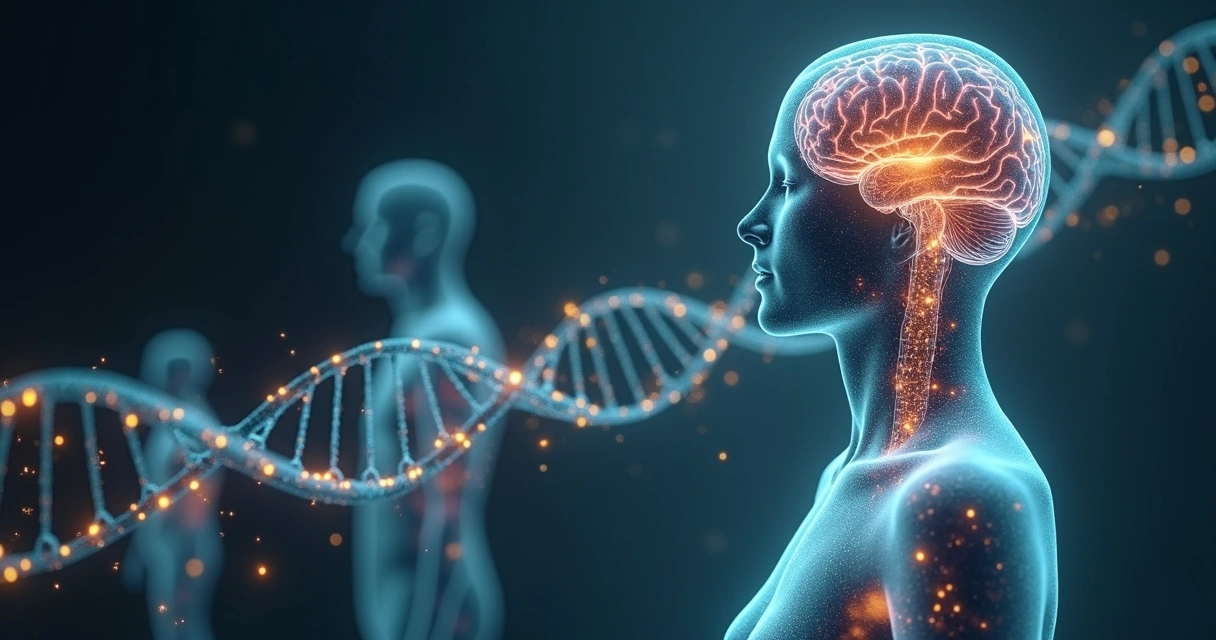
We all know that certain family stories seem to echo from one generation to another—emotional traits, anxieties, even specific fears. This makes us ask: Are these simply learned behaviors, or could they be inherited on a biological level? The science of emotional epigenetics offers new ways to understand this complex connection between life experience and legacy. In this article, we examine how emotional experiences, especially stress, may shape not only our lives but also the lives of our children—sometimes before they are even born.
Understanding emotional epigenetics
Before we approach the question of whether stress responses can be inherited, it's helpful to understand what emotional epigenetics means. Epigenetics itself is the study of changes in gene function that do not involve alterations to the DNA sequence but are still passed down during cell division. Emotional epigenetics focuses specifically on how emotional experiences, such as trauma or chronic stress, can influence these epigenetic marks.
Epigenetic changes act like molecular "switches" attached to genes, turning them up or down based on environmental inputs, including our emotional lives. These changes can impact how our bodies respond to future stress, and, under certain conditions, could even be passed to the next generation.
Layers of stress: From lived experience to biology
We have all experienced moments where stress seems almost physical—a knot in the stomach, a rapid heartbeat, restless sleep. Over time, intense or chronic stress can affect major systems in the body, especially the endocrine and nervous systems. But how does this connect to our genetic inheritance?
When our bodies encounter stress, the "fight or flight" response is activated. This immediate reaction releases hormones like cortisol and adrenaline. Over long periods, repeated activation can cause changes not just in our mental state but also in the way our genes function. These changes happen through epigenetic mechanisms such as:
- Methylation: Tags added onto DNA that silence or activate certain genes.
- Histone modification: Changes to proteins around which DNA is wrapped, influencing gene expression.
- Non-coding RNA: Molecules that adjust gene expression without changing the sequence.
Research has shown that these modifications often occur in genes linked to the regulation of mood, emotion, and stress response.
Can we inherit stress responses?
This question touches both science and personal experience. Some families experience recurring patterns of anxiety, emotional reactivity, or sensitivity to stress, suggesting more than simple behavioral imitation. Growing scientific work points to the possibility that stress responses can be passed from parents to children not only through behavior, but also through biological inheritance shaped by epigenetic marks.
Studies on animals show that parental exposure to extreme stress can cause epigenetic changes in the sperm or eggs. These marks are then transmitted to offspring, who may show increased anxiety or altered stress responses—even if they never experience the original stressful event themselves. In humans, evidence is growing that similar influences occur, especially in people whose parents or grandparents lived through wars, famines, or major traumas.
Yet, we must ask, does this mean we are simply prisoners to the experiences of our ancestors? The answer is far more hopeful, as we will see.
The science and the story: Evidence across generations
The power of epigenetics has become clear in several striking examples. Research on survivors of traumatic events indicates that their children—and sometimes their grandchildren—show unique patterns in stress hormone production and gene expression. For instance, individuals whose parents lived through mass trauma often display differences in cortisol regulation.
The same occurs in animal studies, where, for example, offspring of rodents exposed to chronic stress display altered anxiety behaviors and stress hormone patterns. In these cases, researchers have identified specific epigenetic markers in the brain and reproductive cells linked to these behavioral changes.
It's not only extreme trauma that leaves a mark. Chronic, lower-level stressors—such as ongoing family conflict, economic hardship, or social discrimination—can also influence epigenetic patterns and, accordingly, emotional responses in the next generation. We think this is a strong indication that both the intensity and frequency of emotional experiences play a role in shaping these processes.
Breaking the cycle: The plasticity of our biology
Here is perhaps the most reassuring news. Epigenetic changes are not set in stone—they are reversible and respond to changes in lifestyle, relationships, and environment. This flexibility offers opportunities for personal agency and healing.

Environmental influences, such as supportive caregiving, stable emotional relationships, mindfulness practices, and other positive lifestyle changes, can shift harmful epigenetic markings—even within the same individual. Research in emotional development and consciousness suggests that conscious awareness, emotional regulation, and resilience-building activities may help.
For those interested in practical interventions, resources in applied psychology and mindfulness offer tools that not only help individuals cope with stress, but may also support healthier emotional patterns within families.
Living with awareness: How knowledge can empower us
Stories of inherited patterns can feel heavy. Yet, they can also inspire us to become even more engaged in our own growth and well-being. By learning about epigenetics, we gain a deeper sense of why certain emotional habits appear in our lives, and more importantly, what we can do about them.
Our choices today can change emotional legacies tomorrow.
If you are interested in the growing research on the inheritance of stress and emotion, exploring the latest studies and developments can help you gain clarity and hope. A dedicated search on stress inheritance can offer valuable perspectives.
Conclusion
Emotional epigenetics brings a new lens to human potential and the relationship between past and present. While patterns of stress and anxiety can echo across generations, we are not helpless before our biology. Through intentional action, self-knowledge, and mindful living, we can shift not only our own experience of stress, but also that of future generations. This awareness gives us practical ways to interrupt cycles, transform challenges, and consciously cultivate resilience.
Frequently asked questions
What is emotional epigenetics?
Emotional epigenetics studies how life experiences—especially strong emotions such as stress or trauma—can influence changes in gene function that are passed from one generation to the next, without changing the underlying DNA sequence. It focuses on how emotions interact with biology, shaping health and behavior through small chemical markers on genes.
Can stress responses be inherited?
Yes, research suggests that stress responses can be inherited. Experiences of stress or trauma can lead to epigenetic modifications in a parent’s reproductive cells, which are then passed down, sometimes affecting the offspring's own stress response system and emotional regulation.
How does stress affect our genes?
Stress causes biological responses that result in epigenetic changes, such as DNA methylation or histone modification. These chemical changes influence which genes are active or inactive, especially those related to how we react to stress, mood regulation, and emotional processing.
Is inherited stress reversible?
Inherited stress is not fixed or permanent. Epigenetic markers are dynamic and can change in response to positive environments, supportive relationships, healthy lifestyle changes, and mindful practices. This means harmful patterns can be softened or even reversed.
Are there ways to reduce inherited stress?
Yes. Supportive caregiving, emotional regulation techniques, community support, and regular mindfulness practices can help reduce inherited stress. Engaging in self-knowledge and resilience-building activities offers practical ways to create healthier emotional patterns for ourselves and future generations.